



Electrochemical Workstation
Electrochemical Workstation
Equipment Overview
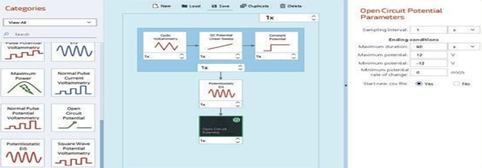
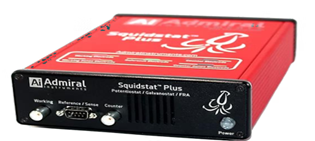
The Electrochemical Workstation is an integrated, high-precision measurement system. Its core functionalities include a Potentiostat / Galvanostat and Electrochemical Impedance Spectroscopy (EIS) analysis.
This workstation allows for highly accurate electrochemical system measurements and analysis. It is widely applied across critical research fields such as energy storage (batteries), corrosion prevention, electrochemical sensors, and advanced materials, providing in-depth insight into reaction kinetics.
🎯 Key Functions and Application Fields
- Battery Cycling and Performance Analysis: Evaluates the charge-discharge efficiency and cycle life of lithium-ion, sodium-ion, and other battery types.
- Fuel Cell and Supercapacitor Analysis: Measures parameters such as power output, electrochemical activity, and energy density.
- Corrosion Testing and Protection Studies: Simulates the corrosion behavior of materials in various environments and tests the effectiveness of protective coatings.
- Electrochemical Sensor Development: Used for electrochemical detection in fields such as biomedical monitoring, environmental surveillance, and gas sensing.
- Electrocatalysis and Electroplating Research: Investigates reaction kinetics of catalytic processes and the mechanism of metal deposition.
- Organic and Photoelectrochemical Evaluation: Characterization of solar electrodes, photocatalysts, and new energy conversion devices.
⚙️ Principle of Operation
- Controlled Excitation: Applies a specific voltage (Potentiostat mode) or current (Galvanostat mode) to the electrochemical cell to simulate real reaction conditions.
- Response Measurement: High-precision recording of the instantaneous current or voltage response signal from the cell.
Data Analysis: The measured results are converted into I–V curves, Impedance Spectra (EIS), or other electrochemical plots. These plots are then analyzed to decipher the system's reaction kinetics, resistance, and capacitance behavior, providing a comprehensive understanding of the overall electrochemical characteristics.