



Facilities
A Complete Hands-On Semiconductor Learning Environment
The Bachelor Program of Semiconductor at Asia University integrates material characterization, device measurement, thin-film processing, IC packaging, and immersive learning resources, transforming classroom knowledge into practical engineering capabilities.
01|Electrical and Surface Characterization
Develop essential measurement and data-analysis skills spanning device characteristics, thin-film profiles, optical properties, and carrier transport.
 MEASUREMENT 01
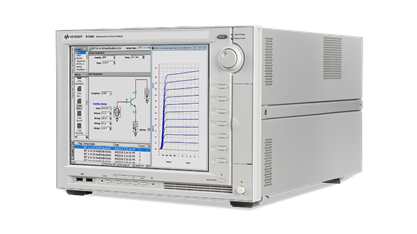
Semiconductor Device Analyzer
A modular platform for I–V, C–V, and pulsed measurements of transistors, diodes, sensors, thin-film devices, and emerging semiconductor materials.
- Ten-slot modular mainframe
- Current range of approximately 0.1 fA to 1 A, depending on modules
- Voltage range of approximately 0.5 μV to 200 V, depending on modules
- Spot, sweep, time, and pulsed I–V measurements
- Approximately 1 kHz to 5 MHz C–V measurement with a supported module
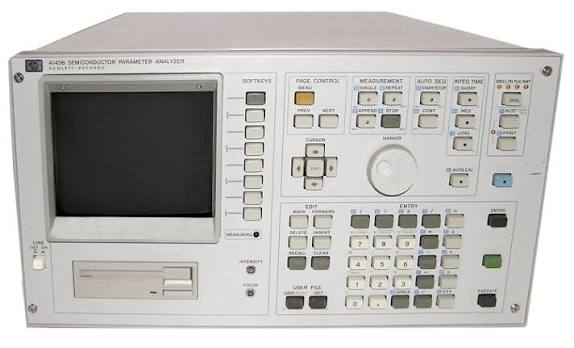
Semiconductor Parameter Analyzer
A semiconductor characterization instrument for DC electrical measurements and characteristic-curve analysis of diodes, transistors, sensors, and thin-film devices.
- I–V characteristic-curve measurement
- Multiple source-measure and voltage-monitoring functions
- Suitable for diodes, transistors, and sensing devices
- Supports parameter extraction and process comparison
- Actual ranges depend on instrument configuration and test conditions
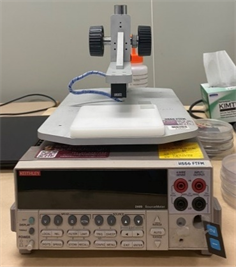
Four-Point Probe System
The four-probe configuration separates current supply from voltage measurement, reducing contact-resistance effects when characterizing wafers and thin films.
- Sheet-resistance measurement of wafers and thin films
- Material resistivity calculation with known thickness
- Reduced lead and contact-resistance errors
- Suitable for conductive films and transparent electrodes
- Range depends on the probe head, meter, and sample conditions
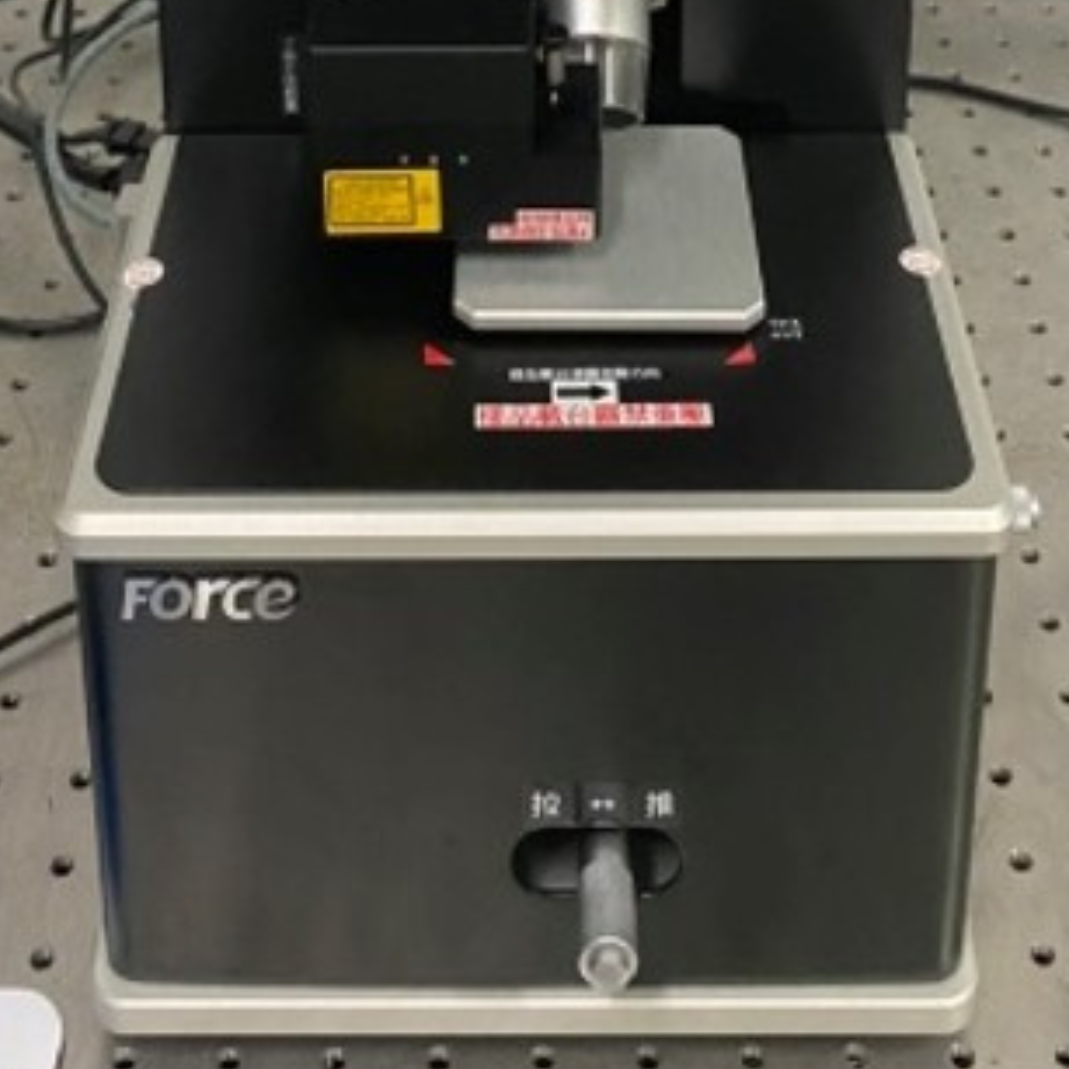
Surface Profiler
A diamond stylus scans the sample surface to measure thin-film thickness, step height, surface roughness, and microstructural profiles.
- Thin-film thickness and etching-depth measurement
- Two-dimensional surface-profile acquisition
- Step-height and roughness analysis
- Suitable for metals, glass, and semiconductor films
- Resolution depends on the stylus and scanning conditions
 MEASUREMENT 05
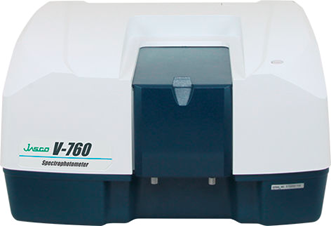
UV-Visible Spectrophotometer
Measures optical absorption and transmission in the ultraviolet and visible regions for thin films, nanomaterials, and optoelectronic materials.
- Wavelength range of approximately 187–900 nm
- Wavelength accuracy of approximately ±0.1 nm at 656.1 nm
- Wavelength repeatability of approximately ±0.05 nm
- Double-monochromator, double-beam, and PMT design
- Scanning speed up to approximately 4,000 nm/min
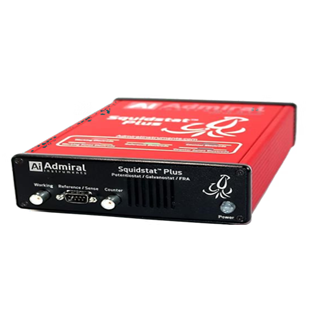
Electrochemical Workstation
Integrates potentiostatic, galvanostatic, and impedance measurements for sensors, energy materials, corrosion studies, and electrochemical devices.
- Scanning voltage range of approximately ±10 V
- Compliance voltage of approximately ±12 V
- Maximum output current of approximately ±1 A
- Current resolution down to approximately 3 pA
- EIS frequency range of approximately 10 μHz to 2 MHz
 MEASUREMENT 07
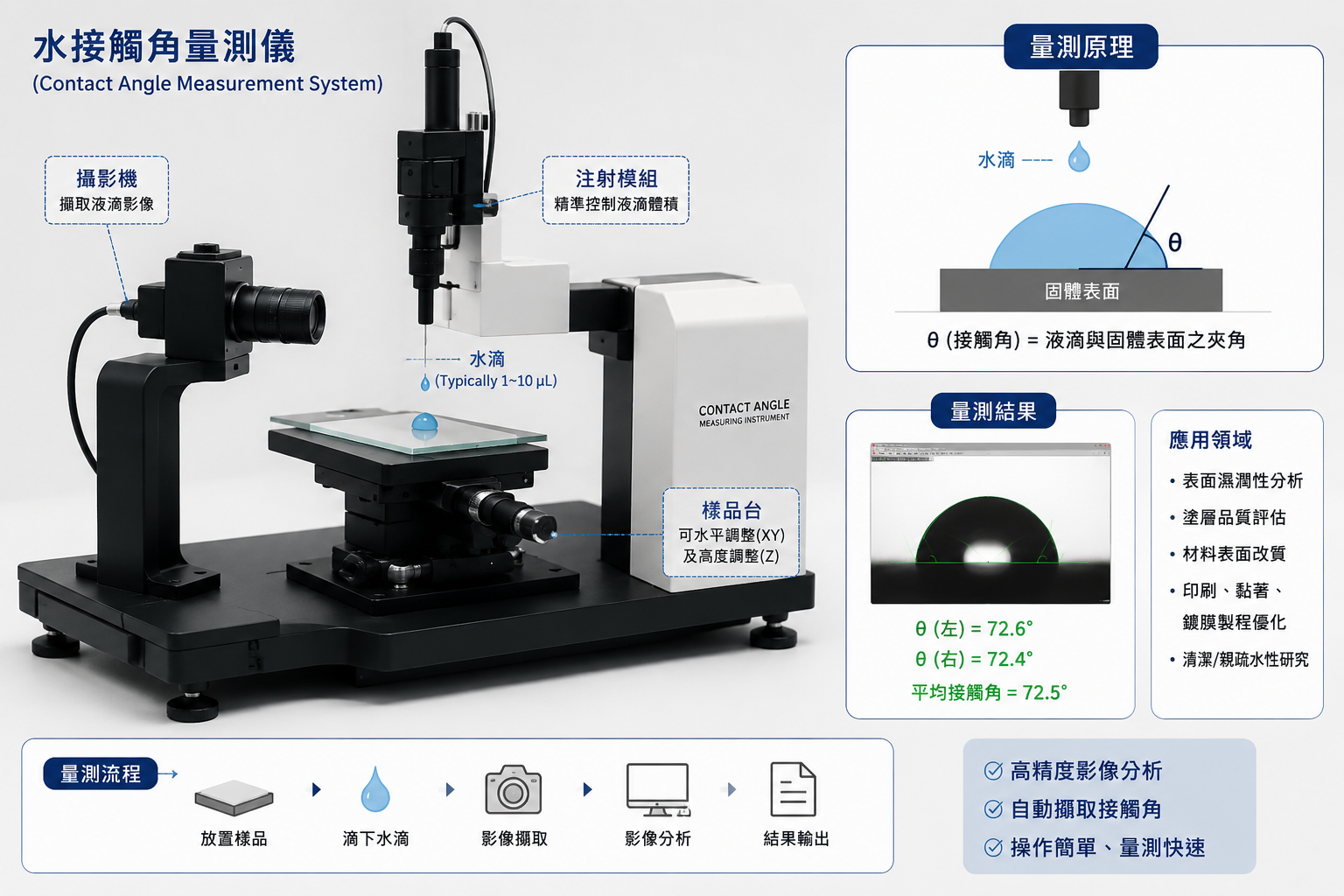
Water Contact Angle Analyzer
Uses droplet-image analysis to evaluate surface wettability and the effects of cleaning, coating, surface treatment, and packaging-interface preparation.
- Static water-contact-angle measurement
- Hydrophilic and hydrophobic surface evaluation
- Cleaning and surface-treatment assessment
- Potential extension to surface-energy analysis
- Accuracy depends on imaging, droplet, and software settings
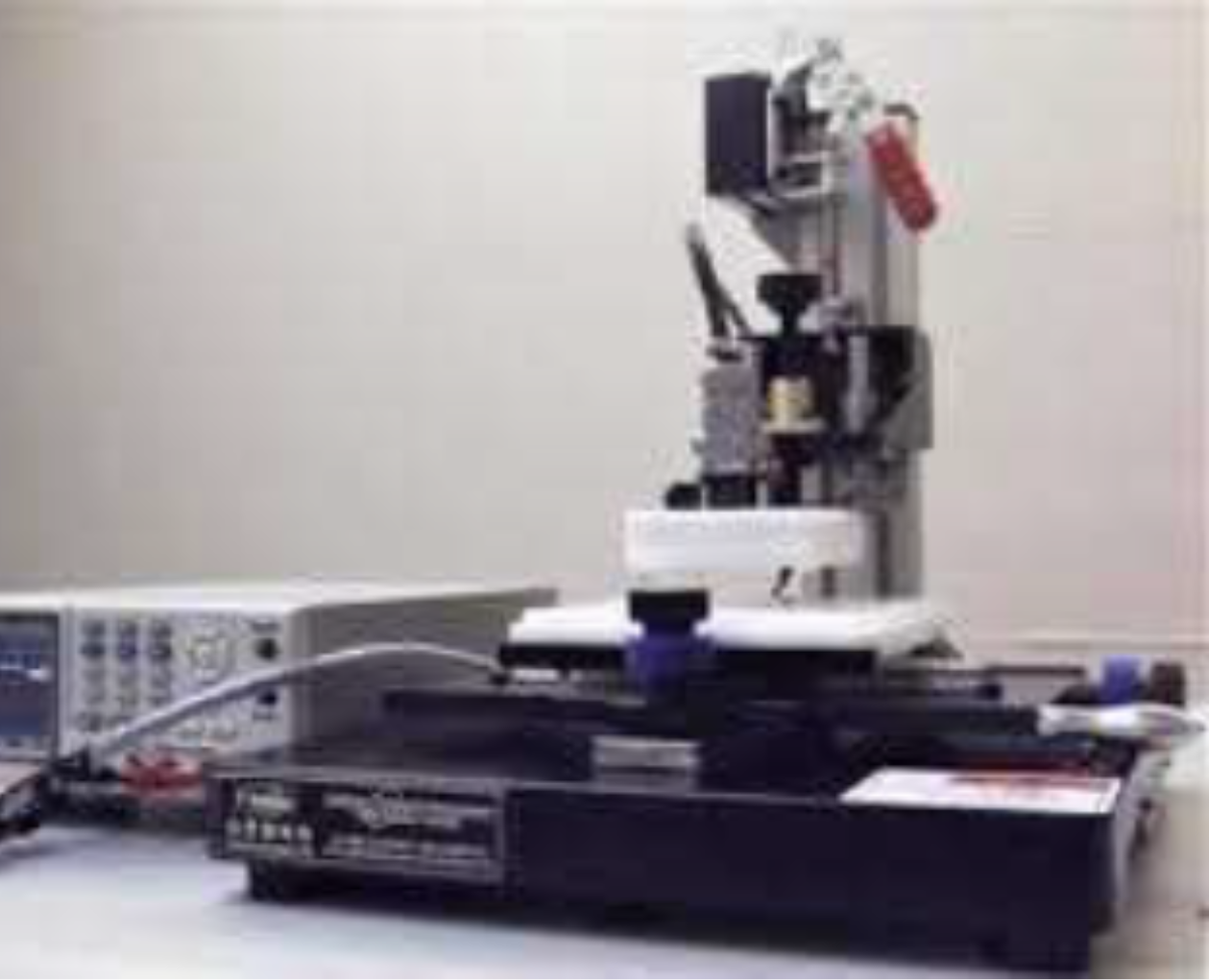
Hall Measurement System
Uses an applied magnetic field and Hall voltage to determine conductivity type, carrier concentration, mobility, sheet resistance, and resistivity.
- N-type and P-type semiconductor identification
- Carrier concentration and mobility measurement
- Sheet resistance and resistivity analysis
- Suitable for semiconductor and transparent conductive films
- Conditions depend on sample dimensions and contact quality
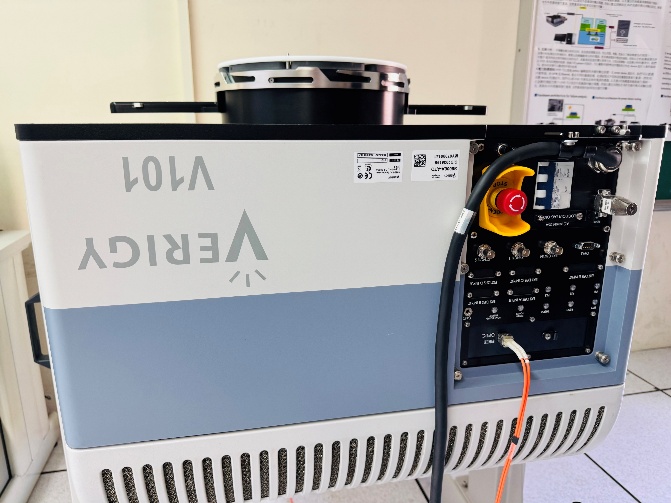
V101 Automated Test and Integration System
A flexible platform that integrates instruments, control modules, and test sequences to establish repeatable automated verification procedures.
- Automated test-sequence configuration
- Integration with probe stations and electrical instruments
- Suitable for device analysis and process verification
- Improves measurement consistency and data management
- Functions depend on installed modules and configuration
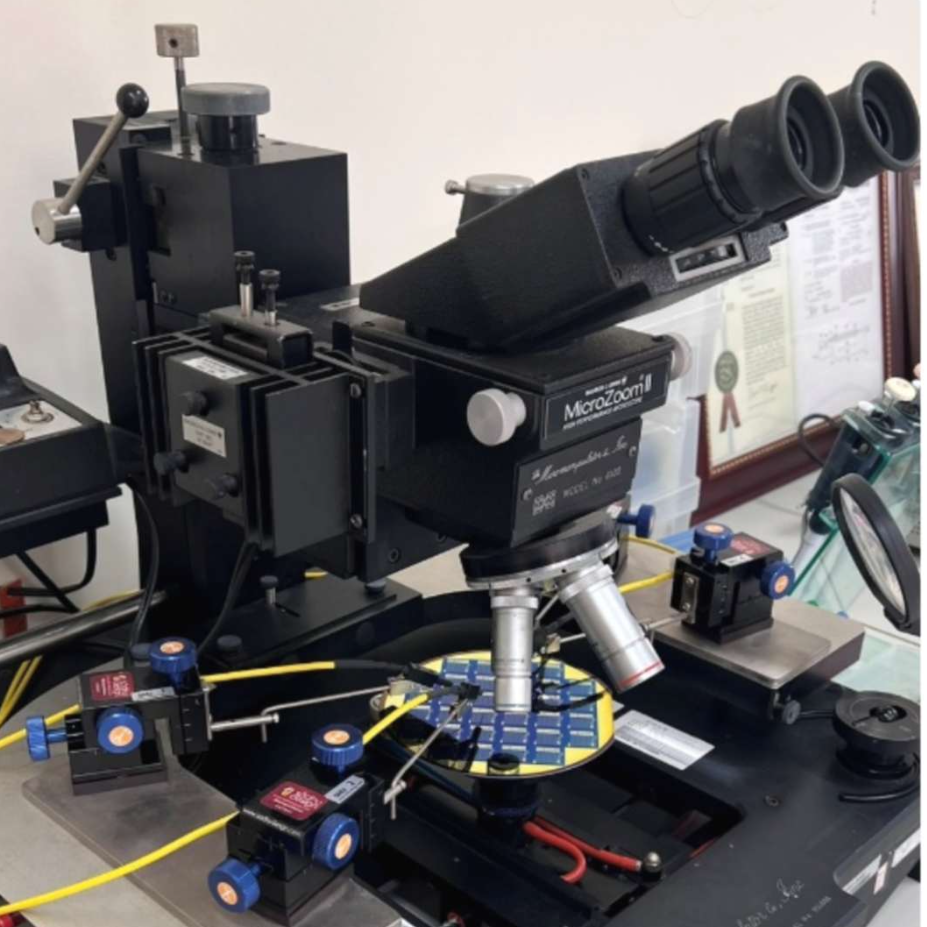
Probe Station
Combines an optical microscope, precision positioning stage, and microprobes for electrical measurements on wafers, dies, and small electrode structures.
- Wafer- and die-level electrical measurements
- Precision XYZ positioning and probe alignment
- Connection to parameter analyzers and source meters
- Suitable for I–V, resistance, and contact measurements
- Capability depends on probe and instrument configuration
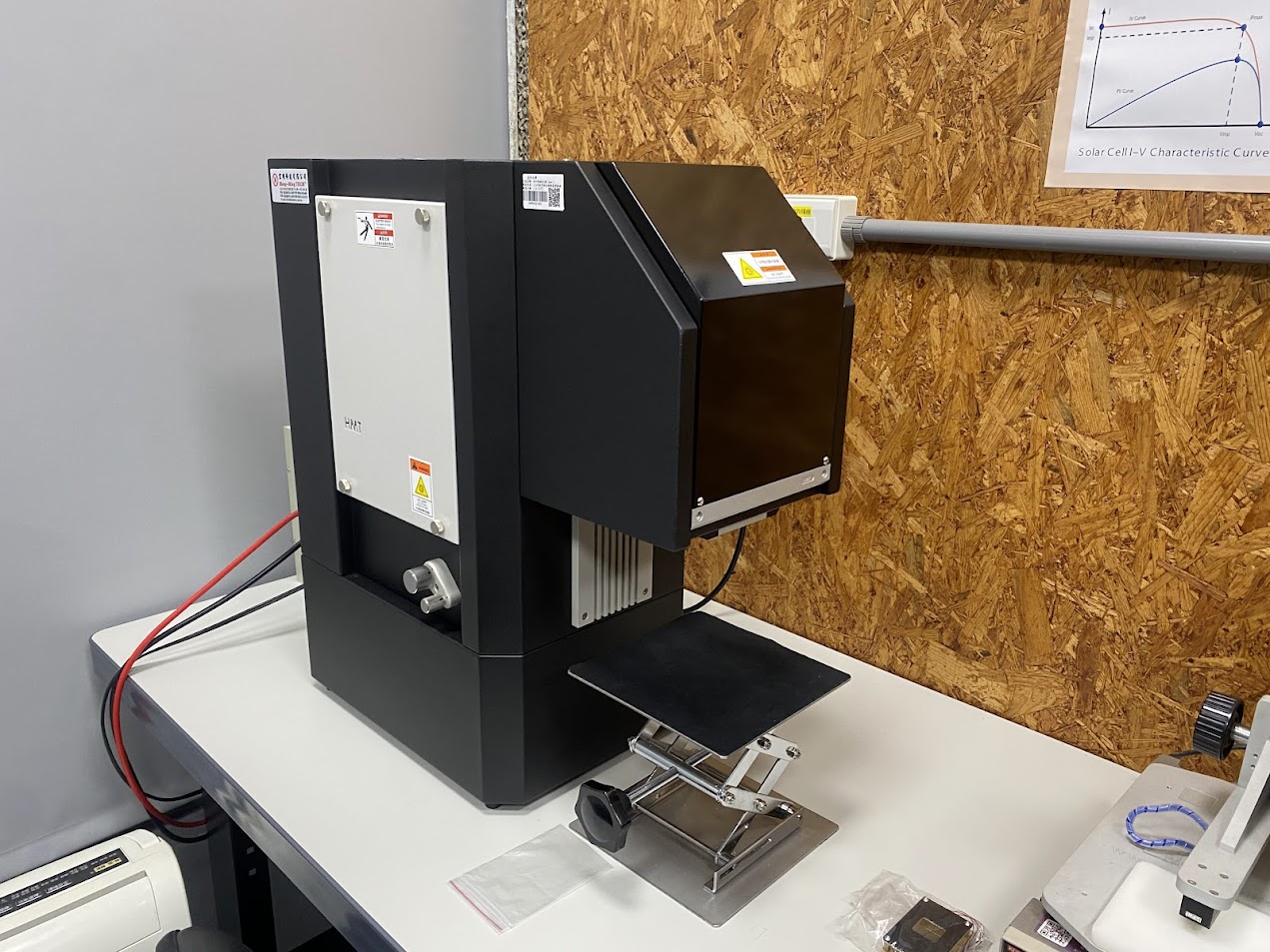
Solar Simulator
Provides a controlled light source approximating a standardized solar spectrum for evaluating photovoltaic devices, photodetectors, and optoelectronic materials.
- Standardized solar-illumination simulation
- Commonly associated with AM 1.5 Global testing concepts
- Can be integrated with I–V measurement
- Suitable for solar cells and photodetectors
- Irradiance and spectral performance depend on calibration
02|Thin-Film and Materials Processing
Explore thin-film deposition, thermal treatment, and precision coating processes used to transform materials into functional device structures.
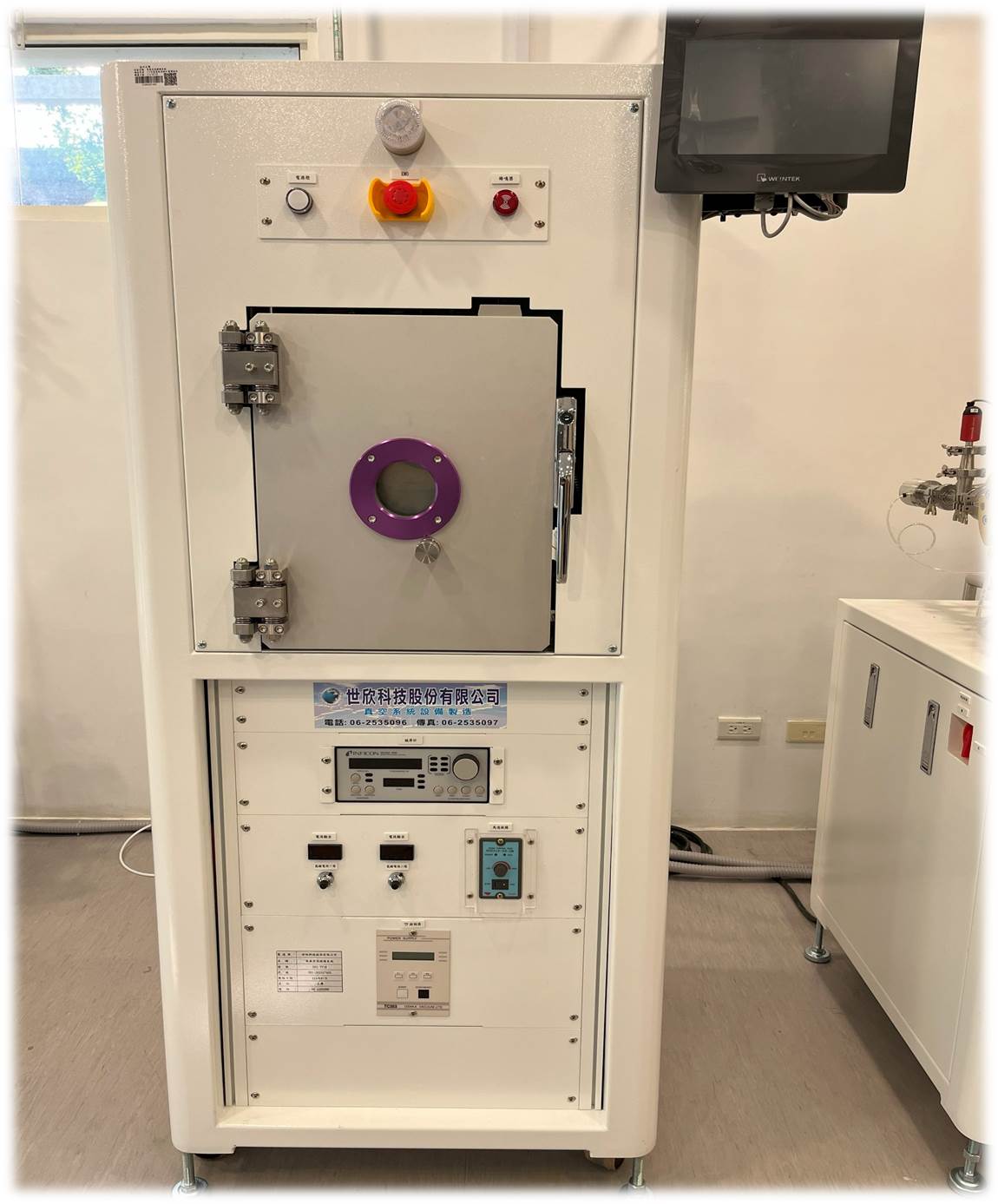
Vacuum Evaporation System
Evaporates source material in a vacuum and deposits it onto a substrate to form thin films, metal electrodes, and functional coatings.
- Physical vapor deposition process
- Suitable for metal electrodes and thin films
- Supports high-purity, low-contamination deposition
- Thickness and rate depend on material and system settings
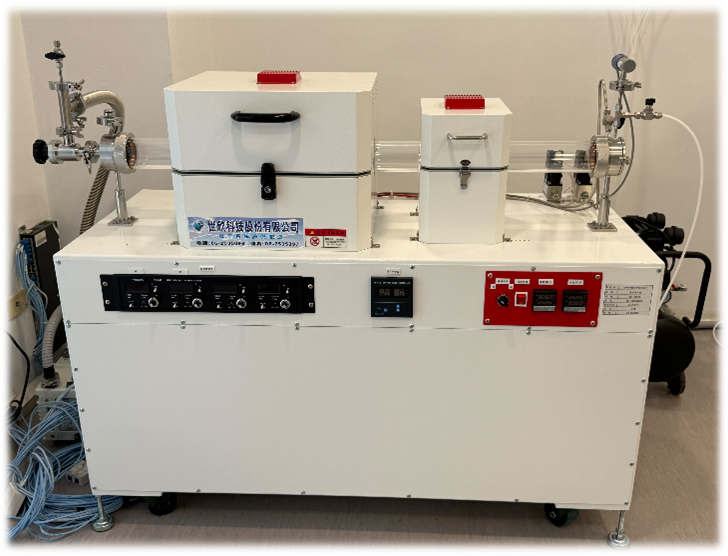
Thermal Annealing System
Uses controlled temperatures and atmospheres to improve crystallinity, thin-film quality, electrical contacts, and process stability.
- Controlled heating, holding, and cooling programs
- Suitable for crystallization and defect recovery
- Supports stress relief and contact improvement
- Temperature and atmosphere depend on process requirements
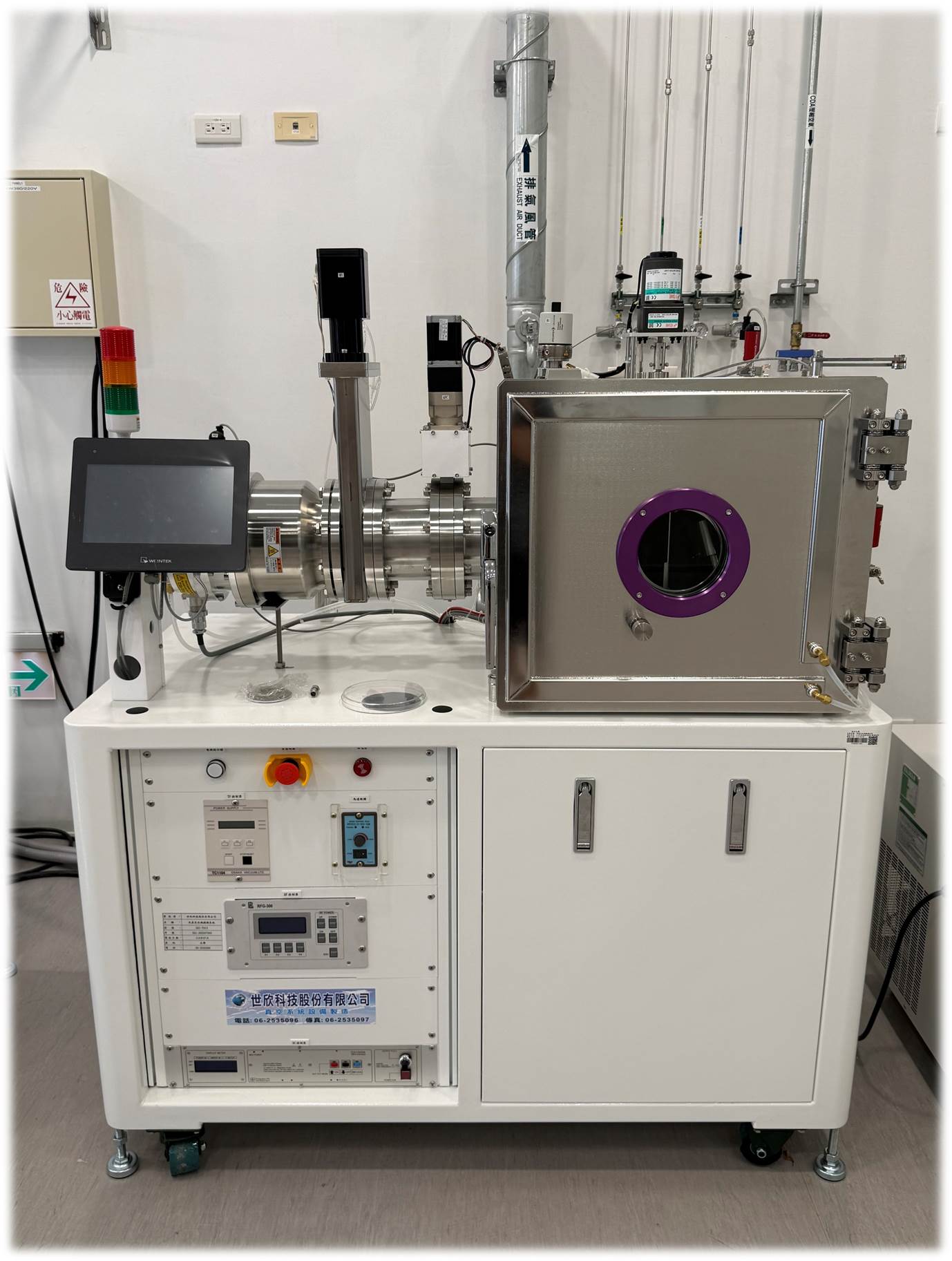
Sputtering System
Uses plasma ions to eject atoms from a target and deposit dense, adherent films on substrates.
- Physical vapor deposition and plasma processing
- Suitable for metals and functional films
- Produces dense films with good adhesion
- Power, pressure, and gas flow are process-controlled
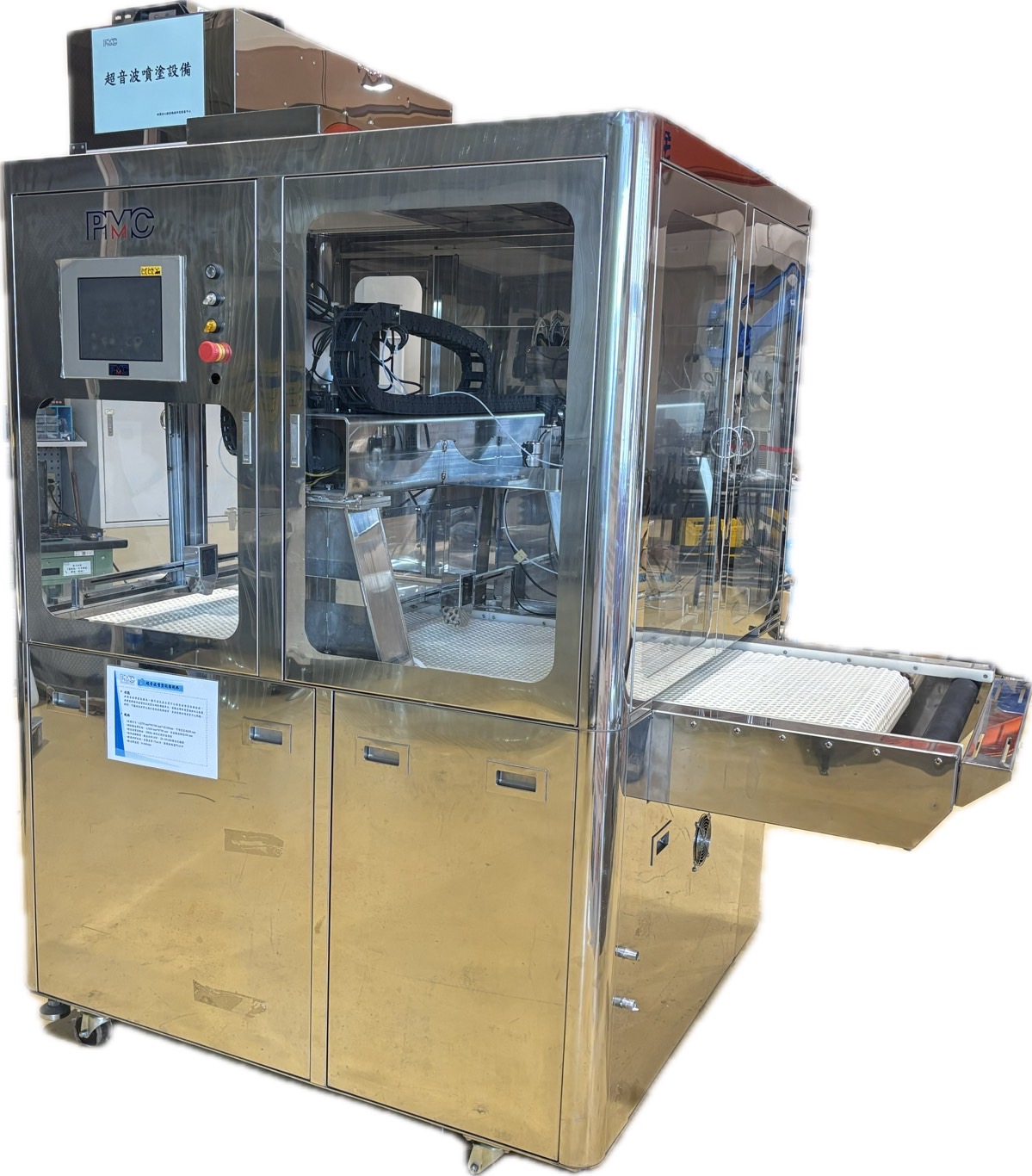
Ultrasonic Spray Coating System
Uses ultrasonic vibration to atomize liquids into fine droplets for uniform, material-efficient, large-area coating.
- Precision liquid atomization and coating
- Improved uniformity with reduced material waste
- Suitable for functional inks and solution processing
- Flow, speed, and nozzle height can be adjusted
06|IC PACKAGING
IC Packaging Quasi Production Line Co-Created with SPIL, connecting wafer dicing, die bonding, and wire bonding.
IC Packaging Quasi Production Line Co-Created with SPIL
This industry–university platform combines packaging equipment, engineering experience, and academic courses to develop practical skills in equipment operation, materials, process control, quality inspection, and safety.
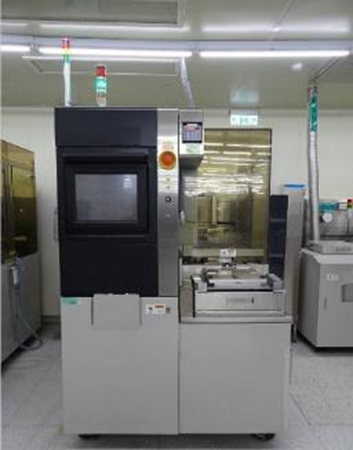 IC PACKAGING 01
Dicing Saw
Separates a processed wafer into individual dies while introducing wafer mounting, blade systems, cooling, alignment, and cut-quality inspection.
- Wafer mounting with blue tape and frames
- Dicing blade and spindle systems
- Deionized-water supply and cooling
- Street alignment, chipping, and cut-quality inspection
- Specifications depend on machine model and process setup
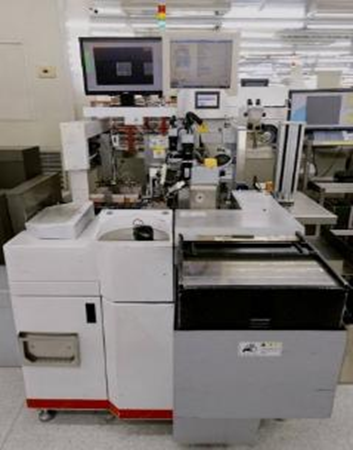
Die Bonder
Picks and accurately places individual dies onto substrates or leadframes while integrating ejector, collet, vision-alignment, and bonding-force controls.
- XY positioning accuracy of approximately ±30 μm at 3σ
- Rotational accuracy of approximately ±1.5°
- Bonding-force range of approximately 30–500 g
- Supports DAF, collets, ejector needles, and fixtures
- Throughput depends on die and process conditions
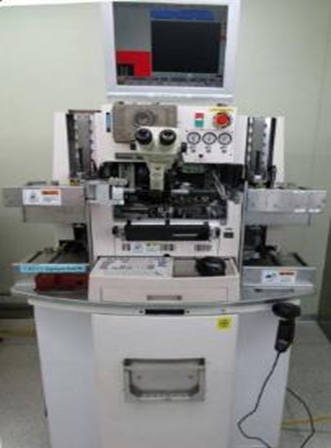
Wire Bonder
Uses fine metal wires to connect die pads with substrate or leadframe pads, establishing electrical paths inside the package.
- Introduction to ball- and wedge-bonding concepts
- Wire, bonding-tool, and wire-path configuration
- Bond placement, loop profile, and quality inspection
- Force, ultrasonic energy, and bonding-time concepts
- Specifications depend on machine and wire configuration
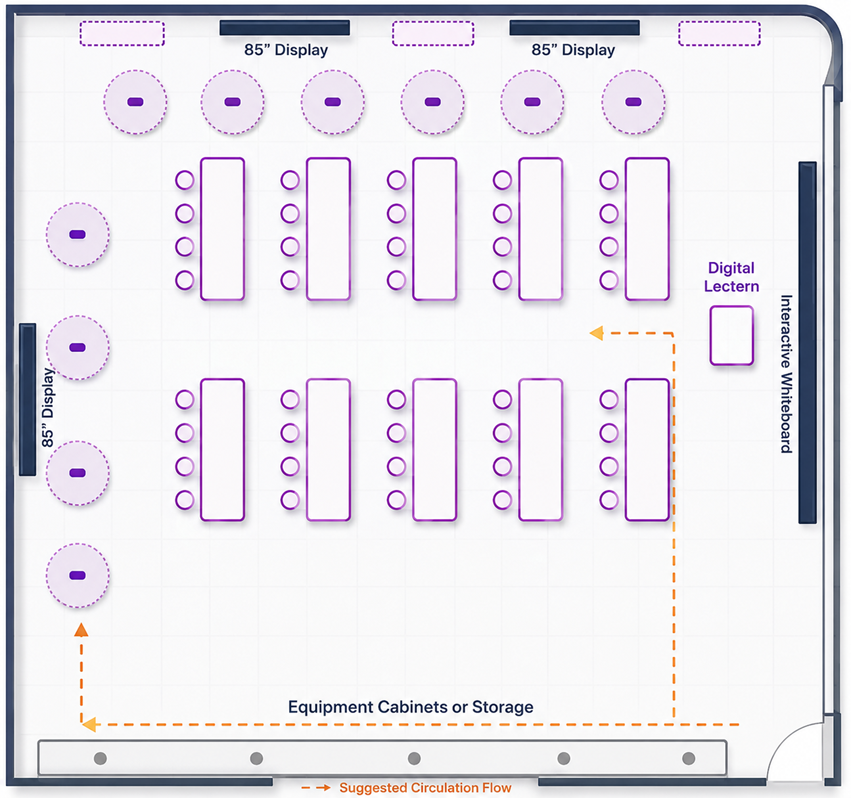
07|AR/VR IMMERSIVE LEARNING
Immersive technologies support packaging-equipment training, standard operating procedures, and safety education.
Immersive Semiconductor Engineering Training
The planned AR/VR classroom will convert packaging processes, equipment structures, operating procedures, and abnormal-event responses into visual learning content. Students can establish process awareness and safety concepts before operating high-precision equipment.