



Asia University Invites NCKU Professor Wang Yung-Ho for Distinguished Lecture: “Semiconductors: From the Nano World to National Strategy”
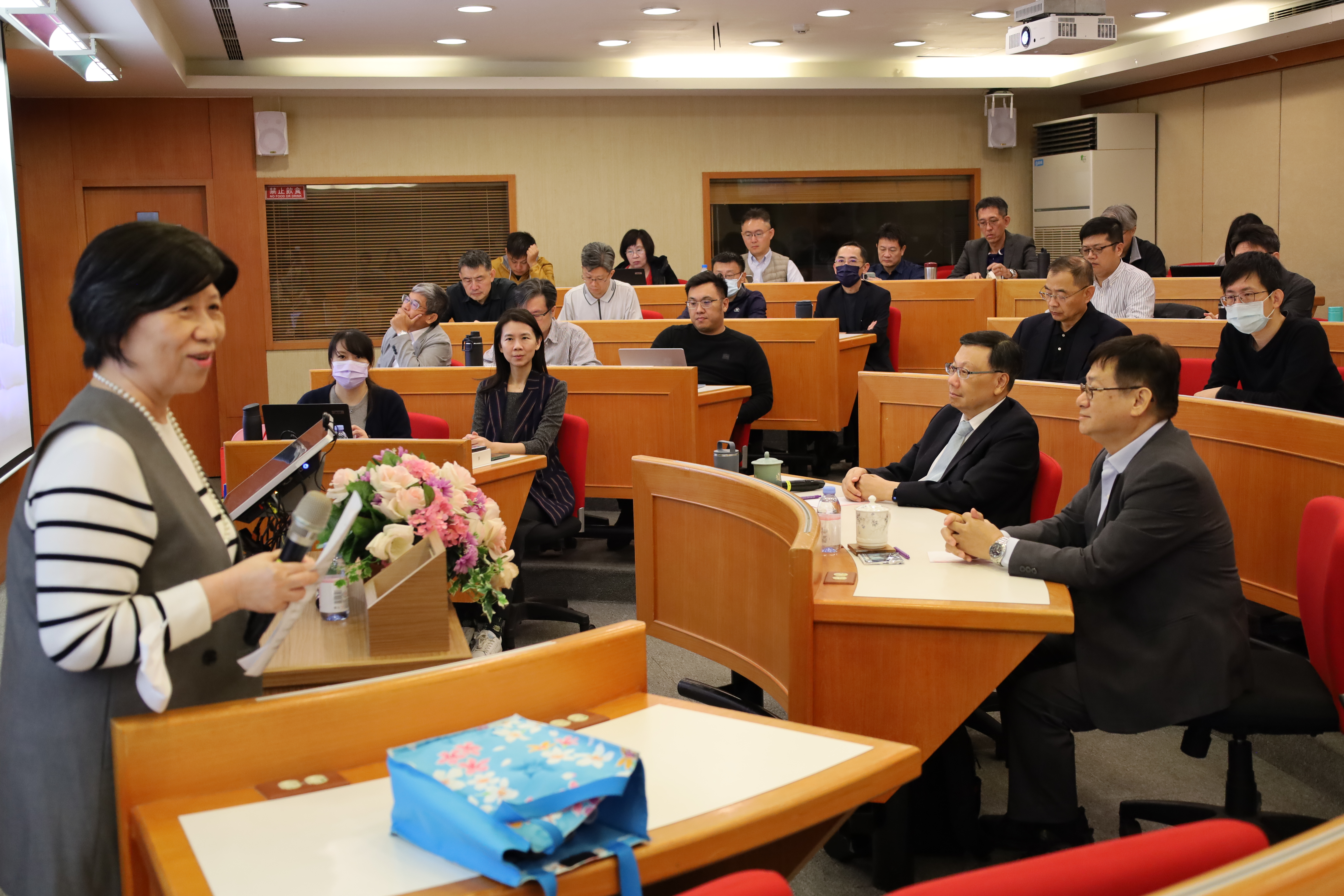
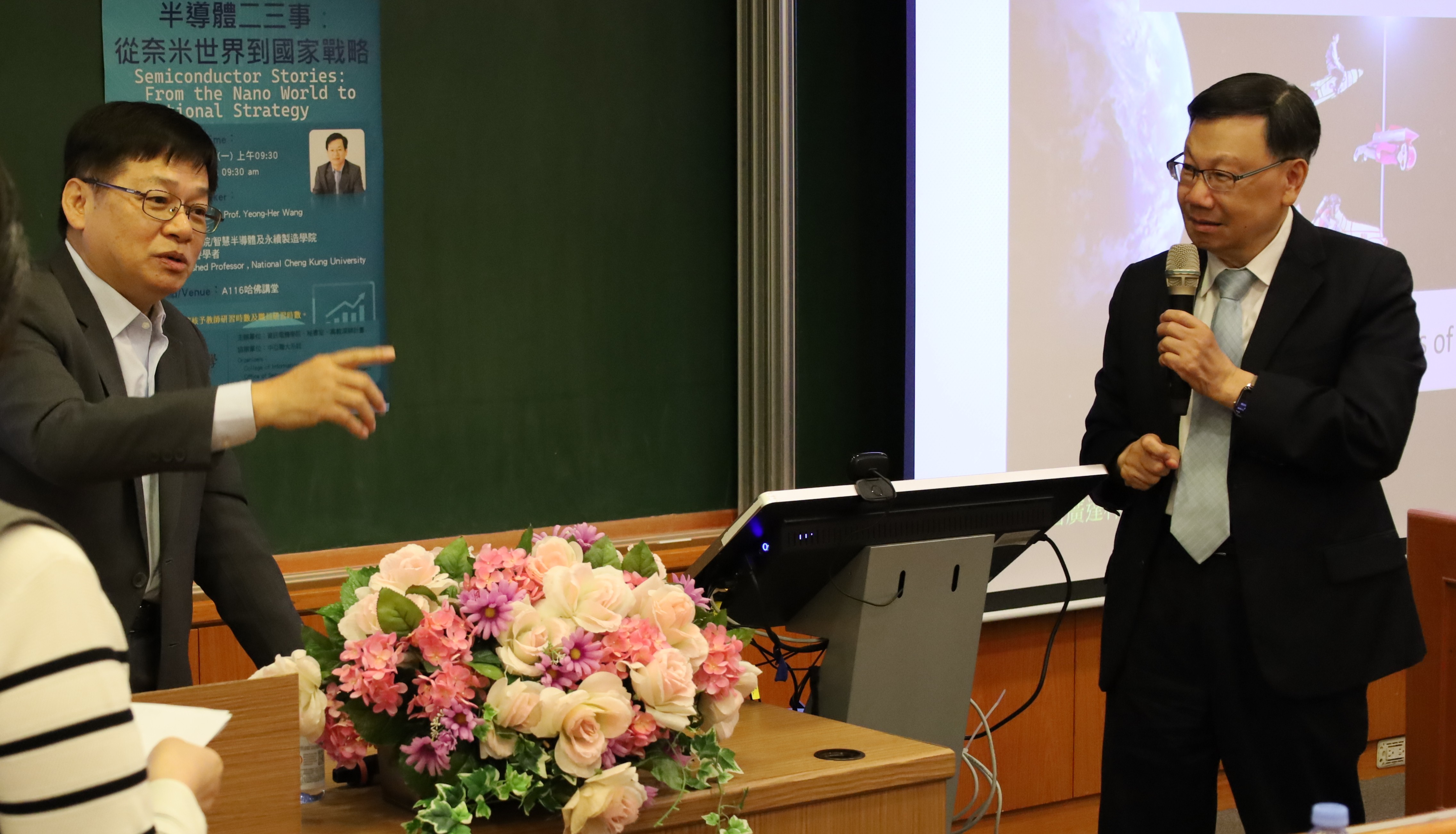
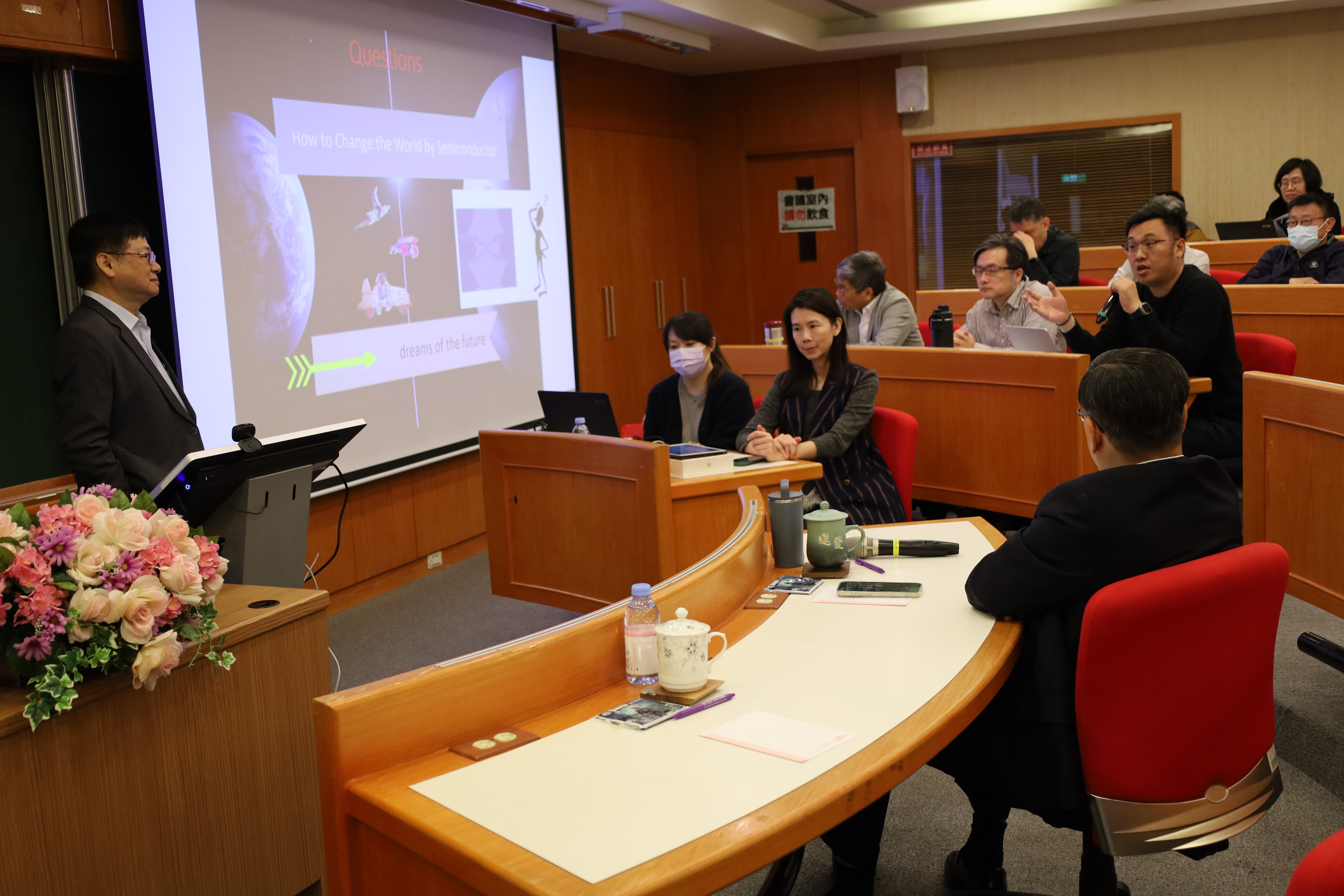
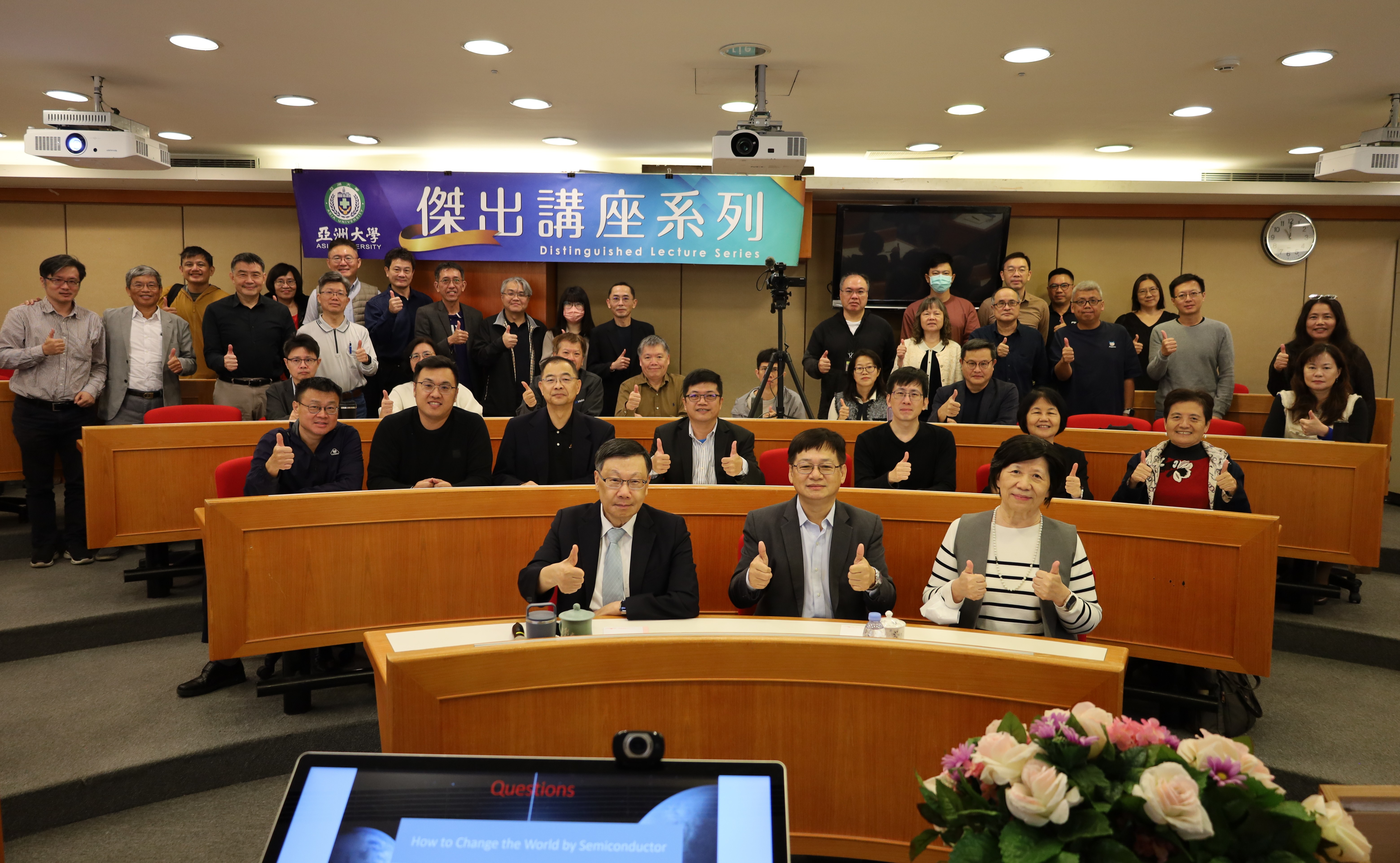
On December 1, Asia University held a distinguished lecture featuring Li Kuo-Ting Honorary Scholar and Professor Wang Yung-Ho from National Cheng Kung University’s College of Electrical Engineering and Computer Science, and the Academy of Smart Semiconductor and Sustainable Manufacturing. His talk, titled “Semiconductors: From the Nano World to National Strategy,” was delivered both in person and online, guiding AU faculty and students from the microscopic world of semiconductor chips to Taiwan’s position amid global competition. The lecture explored how interdisciplinary collaboration and technological evolution are shaping the future.
Asia University Vice President Ke Huizhen, who served as the moderator, highlighted Professor Wang’s extensive expertise spanning engineering science, advanced manufacturing processes, national research policy, and industry collaboration. His lecture bridged the microscopic scale of nanotechnology with macroscopic issues such as geopolitics, industrial layout, and national strategy, offering a comprehensive discussion that went beyond traditional general education.
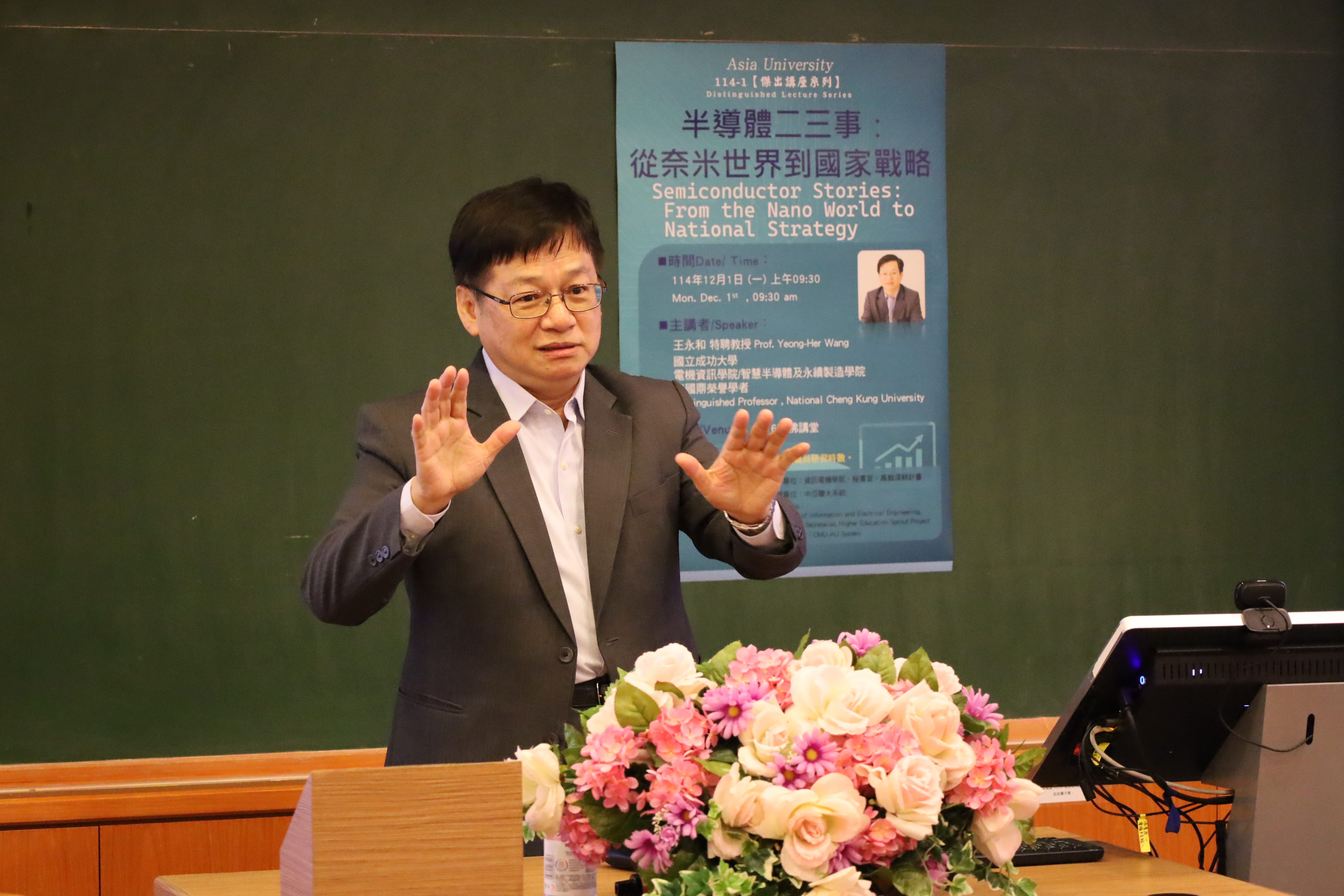
In today’s era of AI and high-performance computing, semiconductors are no longer just electronic components — they are strategic resources influencing global geopolitics. Professor Wang began with a humorous analogy, saying “half of semiconductors fail,” illustrating the challenges of running a semiconductor business. He then led the audience into the “nano world of chips,” unveiling the invisible empire that defines our modern life. He noted that everyone uses semiconductors daily — in smartphones, cars, AI servers, and medical equipment. Chips are the neural network of modern civilization, the water and electricity of the 21st century — whoever can design and manufacture them defines the logic of future civilization.
“The evolution of semiconductor technology is a human journey against the limits of physics,” Wang said. Since Gordon Moore’s 1965 observation that chip density doubles every two years, known as Moore’s Law, the industry has powered decades of technological progress. As transistors approach atomic scale, innovation has shifted from “scaling down” to “cross-domain integration,” marking the rise of interdisciplinary innovation.
From a national strategy perspective, Professor Wang analyzed Taiwan’s pivotal role in the global semiconductor supply chain, evolving from a supplier to a cornerstone of global economic stability. Leveraging its comprehensive industrial clusters and world-class engineers, Taiwan has built a unique vertical integration model. Amid the U.S.-China tech rivalry and global supply chain restructuring, semiconductors have become a key battleground. Wang pointed out that Taiwan’s strengths lie in its long-standing “trust” and “manufacturing yield” — advantages that cannot be replicated through short-term subsidies. However, he cautioned that Taiwan must maintain its technological leadership and deepen basic scientific research to preserve its strategic edge.