




View count:
1098
Evaporation Deposition Systems
Evaporation Deposition System
Instrument Overview
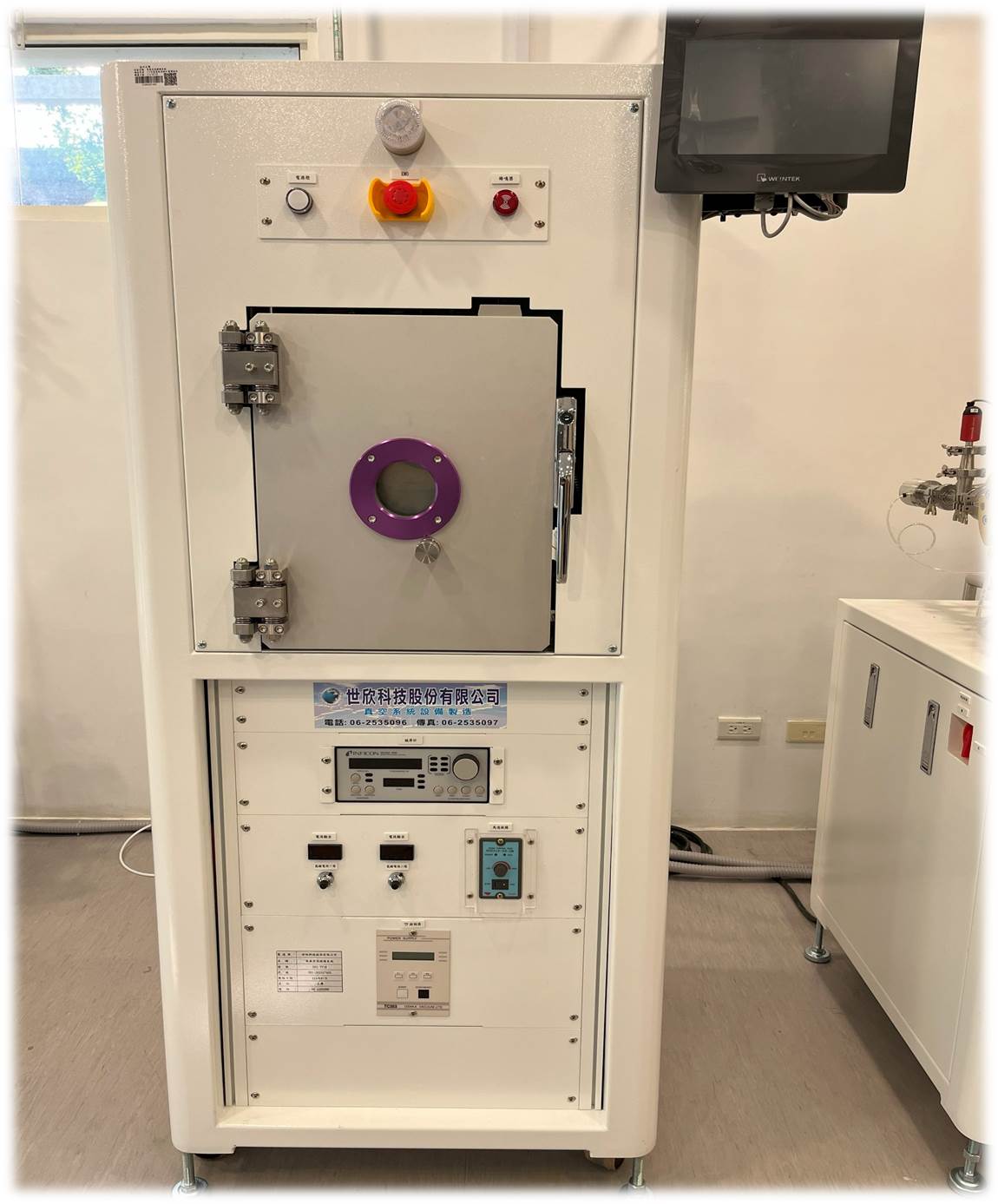
Evaporation is a type of Physical Vapor Deposition (PVD) technique that utilizes high temperatures to vaporize source material into a gaseous state, which then deposits onto a substrate surface in a vacuum environment to form a thin film. This technique offers advantages such as high purity, low contamination, and simple process flow, and is commonly used in the fabrication of metal electrodes, optical coatings, and semiconductor devices.
Key Objectives and Applications
- Semiconductor Processing: Fabricating on-chip interconnects and electrode thin films to ensure high conductivity and stable electronic characteristics.
- Display Manufacturing: Evaporating metal electrodes to enhance the brightness and image quality of display components like OLEDs.
- Optical Coating: Forming high-reflectance or anti-reflective layers on lens or laser component surfaces to improve optical performance.
- Solar Cells: Creating conductive and absorption layers to increase the efficiency and stability of solar cells.
System Principles
- Material Heating and Vaporization: In a high-vacuum environment, materials are heated using an electrical resistance boat (W Boat) or electron beam (E-beam), causing them to evaporate into atomic or molecular gases.
- Vapor Transport and Deposition: The evaporated gas travels in a straight line within the vacuum to the substrate above, where it condenses to form a thin film.
- Thin Film Growth Control: Film thickness and uniformity can be precisely controlled by adjusting the evaporation rate, substrate temperature, and vacuum pressure.
