




Hall Measurement System
⚡ Hall Measurement System
The Hall Measurement System is primarily used to analyze the electrical characteristics of semiconductor materials. By applying a magnetic field and measuring the resulting Hall Voltage in the sample, it can accurately determine key electrical parameters such as carrier type, carrier concentration, and carrier mobility. It is an indispensable measurement tool in semiconductor material research.
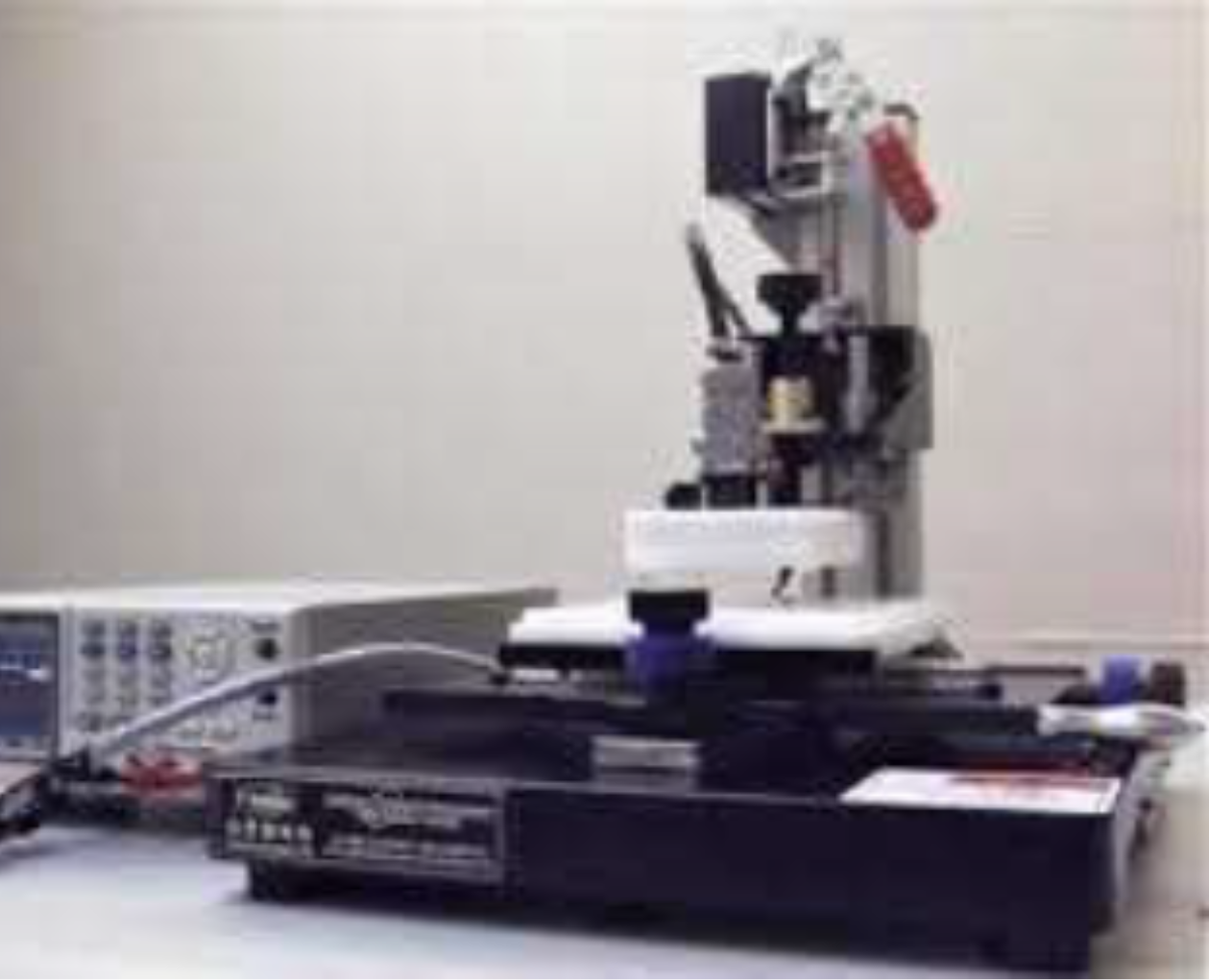
Figure: Hall Measurement System Schematic
🎯 I. Objectives and Applications
-
Identify Carrier Type (n-type / p-type)
Determines whether the primary conductive carriers in the material are electrons or holes.
-
Measure Carrier Concentration
Evaluates the number of free carriers in the semiconductor, reflecting doping concentration or intrinsic conductivity.
-
Assess Carrier Mobility
Analyzes the efficiency of carrier movement under an electric field, which impacts the material's conductive performance.
-
Analyze Resistivity & Conductivity
Provides insights into the material's overall electrical conduction behavior and corresponding physical mechanisms.
-
Semiconductor Characterization and Materials Research
Applied for electrical evaluation of novel semiconductors, thin films, oxides, and composite materials.
⚙️ II. System Principle
-
Apply Current
A stable current is passed through the sample to establish a baseline electric field.
-
Add Magnetic Field
A magnetic field is applied perpendicular to the sample, causing carriers to deflect (the Hall effect).
-
Measure Hall Voltage
The resulting transverse voltage across the sample is measured, and this voltage is used to deduce physical parameters like carrier type, concentration, and mobility.
