




View count:
1198
Solar Simulator Class A
Solar Simulator (Class A)
Equipment Overview
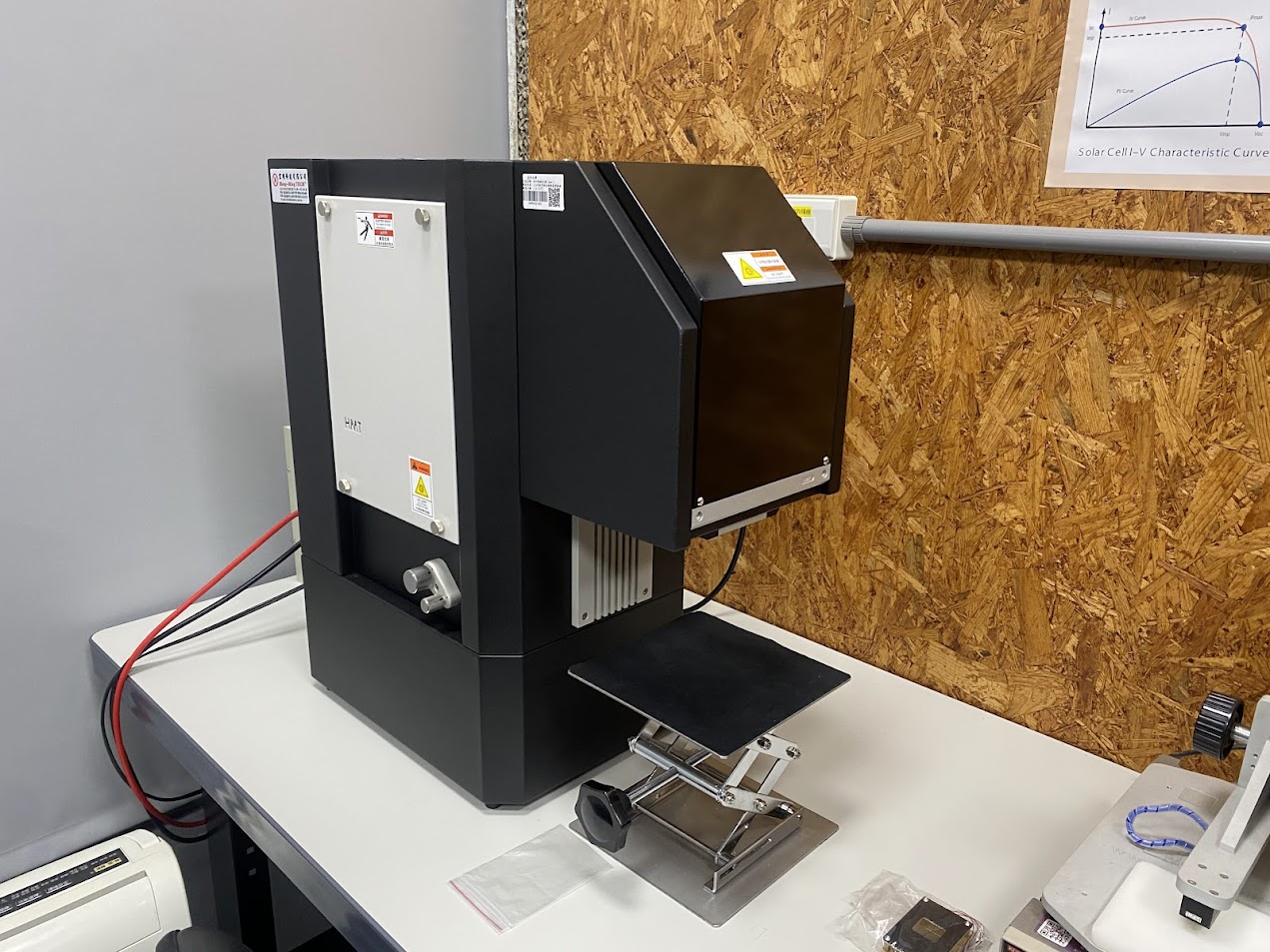
The Solar Simulator is a standardized light source system designed to accurately emulate the natural solar spectrum (typically AM 1.5 Global). It is a critical instrument for the R&D and performance evaluation of Photovoltaic Technologies.
According to the ASTM E927 standard, Class A certification signifies that the simulator meets the highest standards in three key parameters: Spectral Match, Irradiance Uniformity, and Temporal Stability. This precision ensures the stability and reproducibility of test results, making it essential for advanced photovoltaic research and development.
🎯 Key Functions and Technical Advantages
- Class A Accuracy: Achieves the highest performance across spectral match, uniformity, and stability, providing the most reliable testing environment in the industry.
- Standard Spectrum Simulation: Utilizes a Xenon Short-Arc Lamp to produce a continuous spectrum, precisely simulating the AM 1.5 Global sunlight.
- Photovoltaic Measurement Integration: Built-in I-V curve measurement software allows for real-time recording of current-voltage characteristics and calculation of solar cell conversion efficiency.
- Stability Control: A high-precision power supply system ensures stable light output, meeting the strict requirements of Class A irradiance stability.
🛠️ Applicable Samples and Application Areas
- Solar Cell Performance Evaluation: Used for precise testing of the efficiency and output characteristics of various solar cells (Silicon-based, thin-film, dye-sensitized, III-V compounds, and organic PV).
- Materials and Component Development: Supports the R&D and experimentation of new photovoltaic materials, thin-film coatings, and next-generation optoelectronic devices.
- Calibration and Standard Testing: Serves as a standard light source for the calibration of reference cells, photosensors, and laboratory instruments, complying with relevant ASTM and IEC international standards.
- Research and Education: Provides standardized and controllable light conditions for academic research and photovoltaic teaching experiments.
