



On the 11th, Asia University held a Distinguished Lecture and invited Chair Professor Ting-Chang Chang of National Sun Yat-sen University to speak. The lecture focused on semiconductor talent development and character education. Addressing the current talent gap in Taiwan’s semiconductor industry, Professor Ting-Chang Chang analyzed, from the perspectives of industry–academia cooperation that educates talent without a gap between study and work, an innovative training model for undergraduate project students, and breaking learning boundaries for students in the humanities, that the right teaching model is the key to educating interdisciplinary talent.
Vice President Hsiu-Fen Tsai of Asia University served as the introducer and described Professor Ting-Chang Chang’s outstanding work in talent development. His lectures at National Cheng Kung University, TSMC, and other venues have been filled to capacity and have been well received by students and engineers. He has also received a number of industry–academia cooperation awards and has successfully commercialized technology, bringing National Sun Yat-sen University tens of millions of New Taiwan dollars in technology-transfer income, as well as considerable personal returns, showing strong results in industry–academia cooperation.
Professor Ting-Chang Chang noted that demand for semiconductor talent in Taiwan is urgent. Although many universities have established semiconductor industry colleges, a fundamental and effective approach is to add semiconductor-related courses in traditional departments such as physics and materials science. He analyzed that, as required credits in universities have fallen substantially, students now have more room for interdisciplinary electives. If students from different departments can receive semiconductor training on the foundation of their original majors, the talent pool can be greatly expanded.
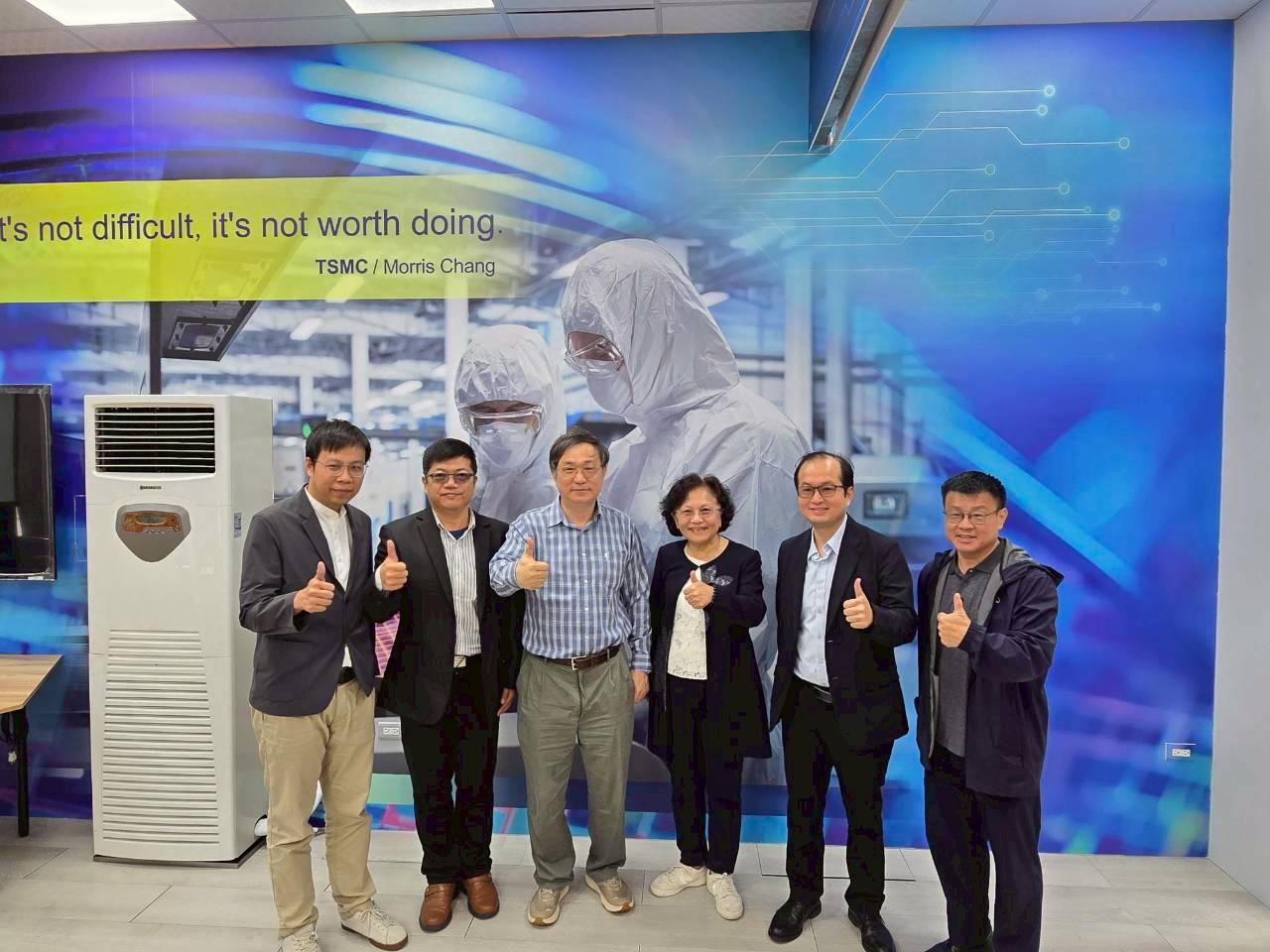
Chair Professor Ting-Chang Chang visits the semiconductor research center.