



Nov 14-16, 2026 Asia University Joins MOE Delegation to the U.S. and Witnesses the Launch of the Taiwan–U.S. Semiconductor Education Alliance
Asia University Vice Presidents Ren-Hung Hwang and Jung-Jie Huang arrived at Washington Dulles International Airport on the evening of November 13 (U.S. time) as part of the Taiwan Ministry of Education delegation for the Taiwan–U.S. Education Initiative and the Taiwan–U.S. Semiconductor Education Alliance, led by Deputy Minister of Education Max Kuo-Wei Liu. The seven-day visit includes the 65th Annual Meeting of the American Association of State Colleges and Universities (AASCU), visits to partner institutions within the National Network for Microelectronics Education (NNME), and a visit to Micron Technology.
Meeting with TECRO and FICHET
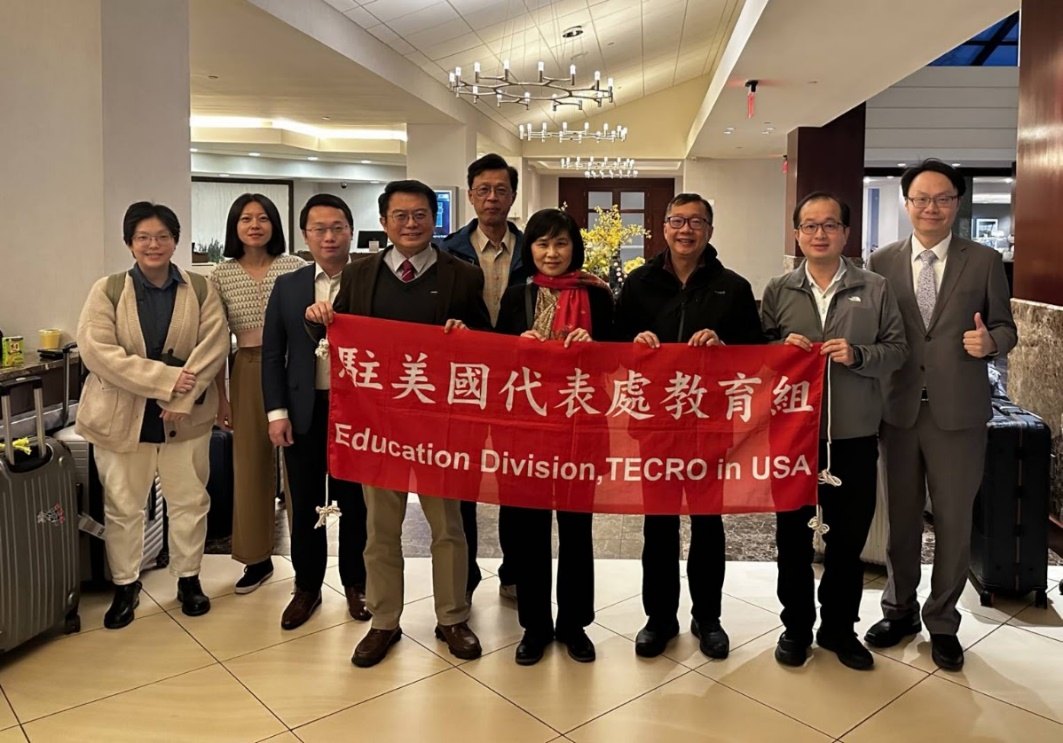
On the morning of Saturday, November 14, the delegation met in Washington with the Education Division of the Taipei Economic and Cultural Representative Office in the United States (TECRO) and the Foundation for International Cooperation in Higher Education of Taiwan (FICHET) to discuss the key objectives of the visit. TECRO and FICHET also shared the latest developments in Taiwan–U.S. higher education collaboration, helping participating universities identify opportunities for partnership with U.S. institutions.
Vice President Jung-Jie Huang said Asia University has invested heavily in recent years in training talent in artificial intelligence and semiconductors. He hopes the delegation will help the university set up more student exchanges, dual-degree programs and research partnerships with U.S. state universities. After the meeting, the delegation flew to Savannah, Georgia, for the AASCU Annual Meeting events.
AASCU Launches the Taiwan–U.S. Semiconductor Education Alliance
The 65th AASCU Annual Meeting opened on November 15 in Savannah, Georgia. In his opening remarks, the AASCU President welcomed the Taiwanese delegation led by Deputy Minister Liu and formally announced the launch of the Taiwan–U.S. Semiconductor Education Alliance and the establishment of the Taiwan–AASCU Scholarship Program, moving Taiwan–U.S. higher education collaboration from individual university partnerships toward a systematic approach to talent development. Vice Presidents Ren-Hung Hwang and Jung-Jie Huang joined the delegation to witness this milestone.
AASCU represents hundreds of public colleges and university systems across the United States. As the United States rebuilds its domestic semiconductor manufacturing capacity, new fabrication plants and supply chains are being established across various states, many of which are home to AASCU member institutions, while Taiwan has accumulated decades of experience in semiconductor education and talent development. The alliance aims to combine these strengths through student scholarships and hands-on learning, faculty development and research collaboration, and cooperation at both state and federal levels, supporting talent in semiconductors and advanced manufacturing and the stability and resilience of Taiwan–U.S. supply chains.
Vice President Ren-Hung Hwang said semiconductors and advanced manufacturing are strategic industries for both Taiwan and the United States, and that talent is the key to their success. “The alliance brings together Taiwan’s industrial expertise and the extensive network of U.S. public universities with strong regional engagement. The scholarship program, meanwhile, creates tangible opportunities for academic exchange between students from both countries,” he said, adding that Asia University will actively seek partnerships with AASCU member institutions, leveraging its strengths in artificial intelligence and semiconductors. During the Annual Meeting, Asia University also signed an MOU with the University of South Carolina Beaufort (reported separately). In the evening, the delegation attended the AASCU welcome reception and met with university presidents from across the United States.
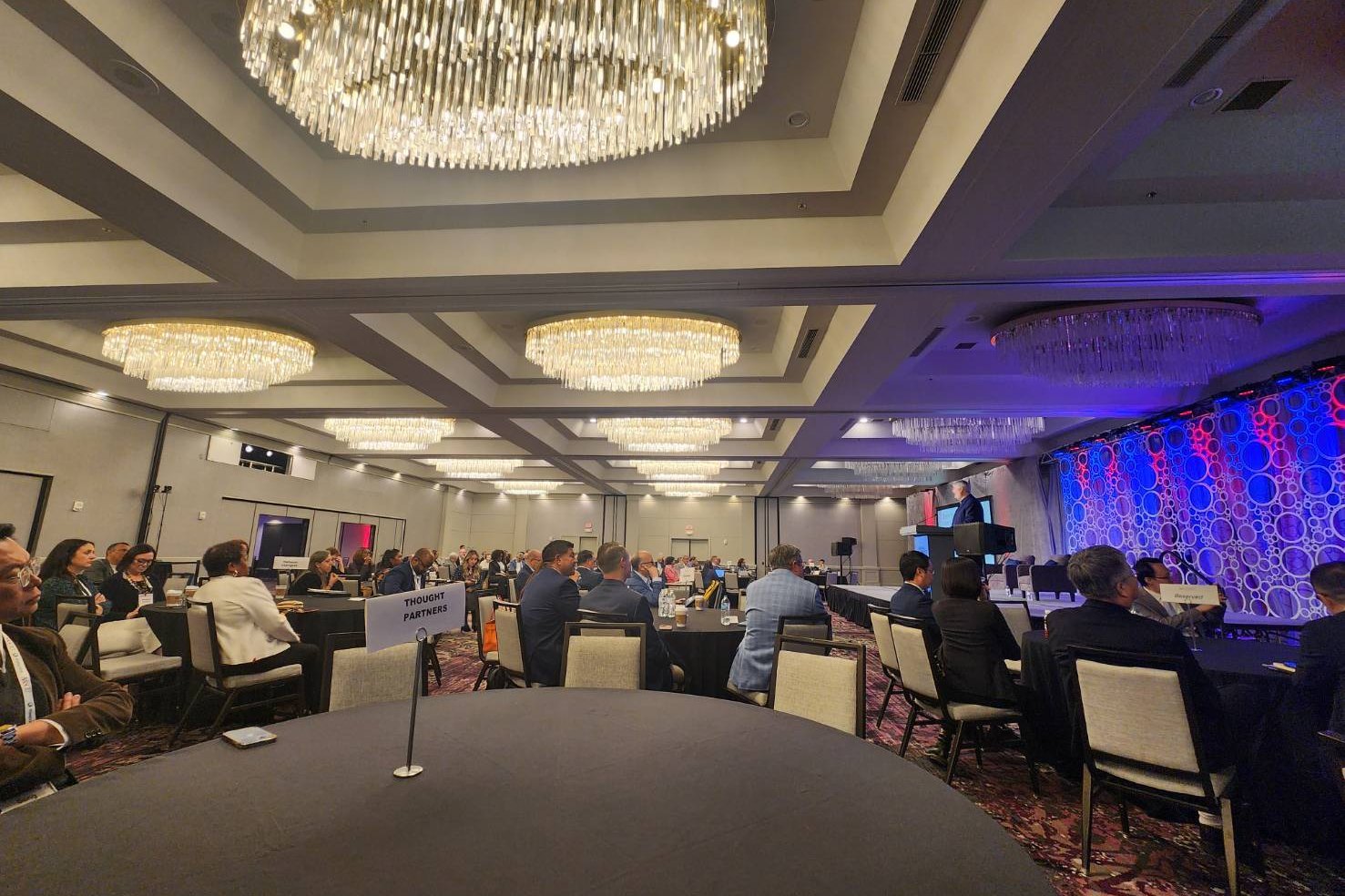
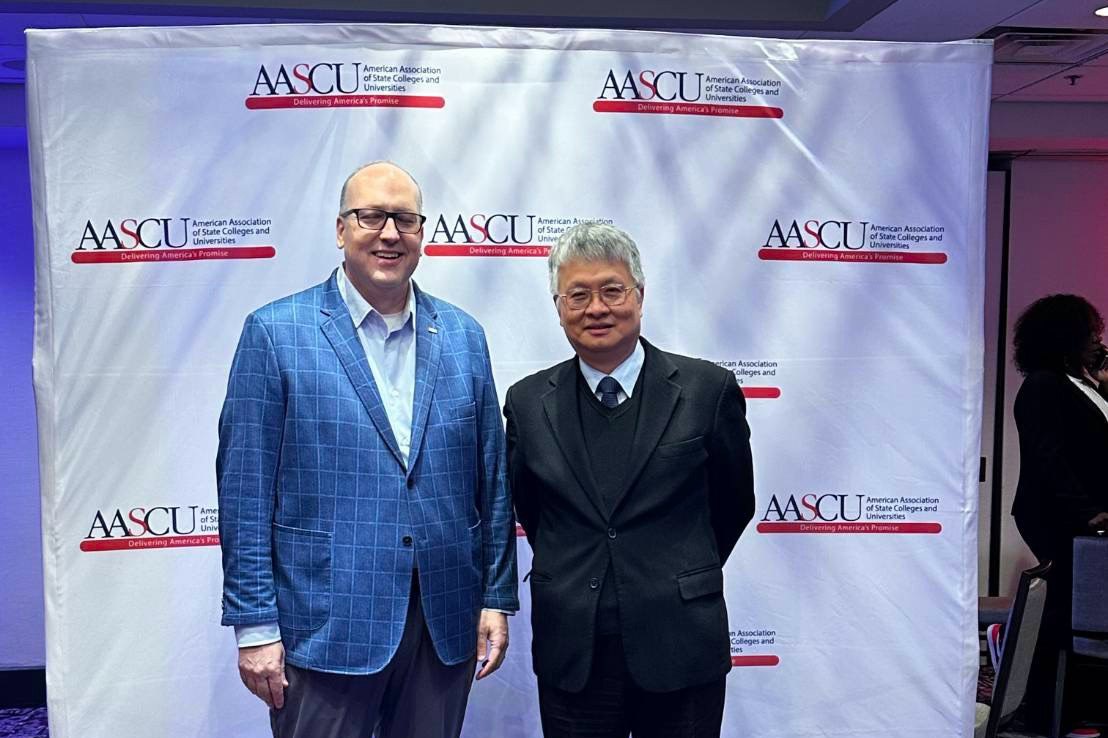
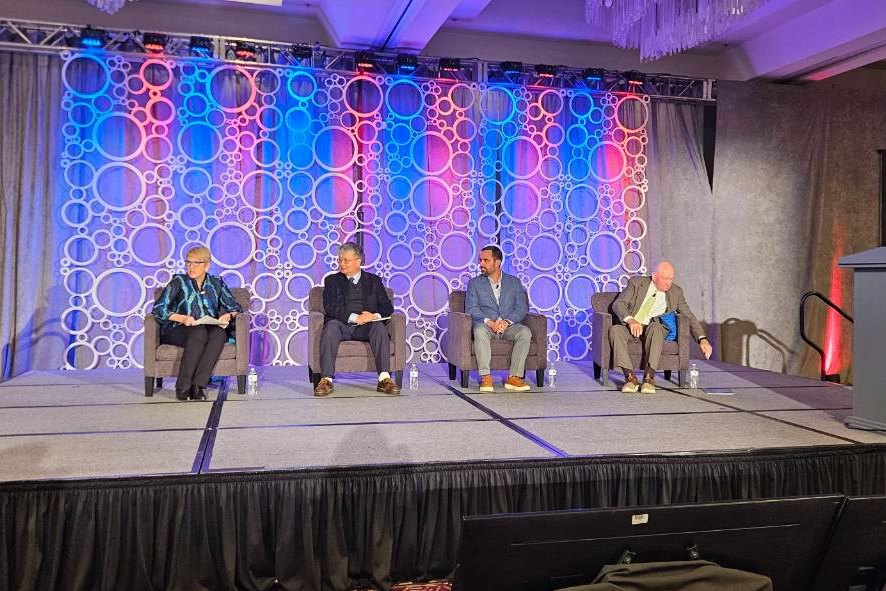
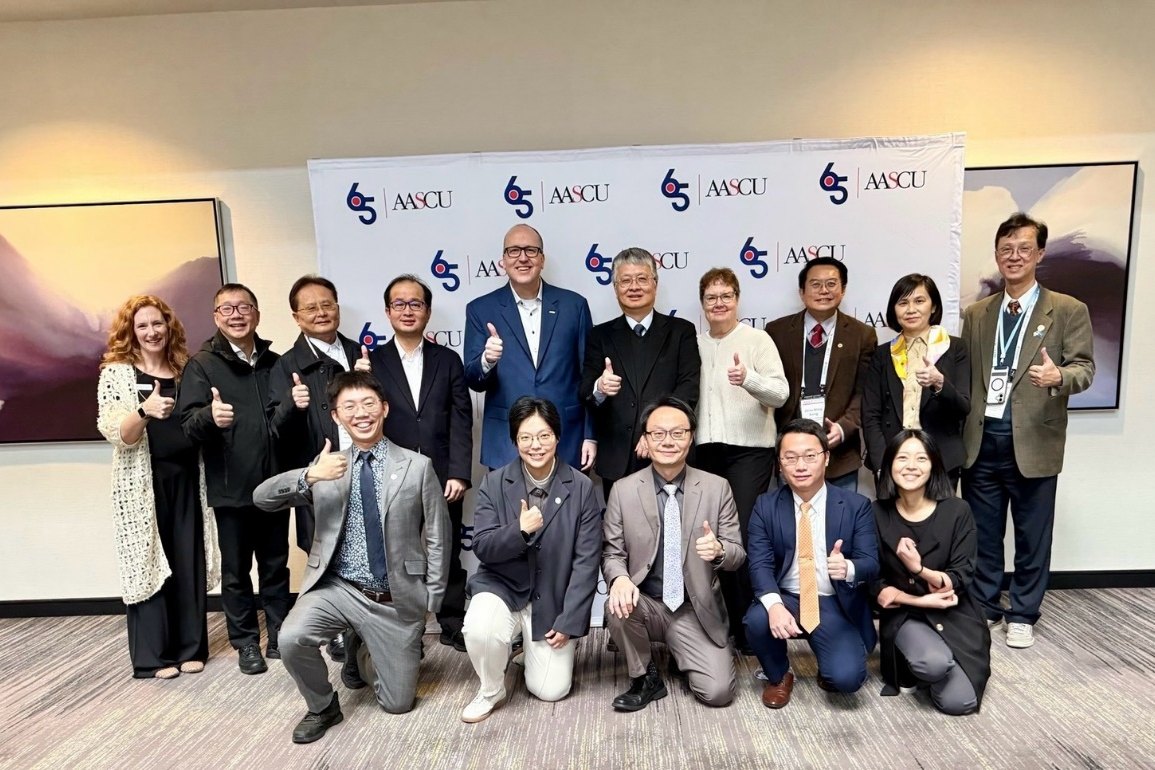
On the morning of Monday, November 16, Vice President Ren-Hung Hwang, who is also Dean of the College of Artificial Intelligence, took part in the AASCU featured session “AASCU’s Partnership with Taiwan: Doorways to Strategic Engagement.” Joining presidents of U.S. public universities, he introduced Asia University’s strengths and outlined three strategic directions and concrete goals for Taiwan–U.S. collaboration. Vice President Jung-Jie Huang also attended. The AASCU Vice President for Academic Innovation and Transformation and Deputy Minister Liu first outlined the objectives of the strategic partnership.
The first direction is semiconductors and advanced manufacturing. As the United States rebuilds its semiconductor manufacturing, many AASCU campuses are in regions attracting new fabrication plants and suppliers. Asia University offers a comprehensive semiconductor education pathway covering device physics, chip design, and pilot-scale IC packaging production lines, and can offer U.S. students short-term technical courses, summer laboratory programs, and internships with Taiwanese companies, while supporting partner universities in curriculum development. The second is healthcare and aging societies, with joint research in smart healthcare and telemedicine, faculty exchange, and clinical or community learning built on the university’s affiliated hospital and its nursing, long-term care, and AI healthcare programs. The third is two-way student mobility, through semester exchanges, English-taught programs, and dual-degree or joint-degree programs that students can complete on schedule and at an affordable cost.
The concrete goals include hundreds of students taking part in bilateral exchanges each year with smooth credit transfer; internship pathways that bring U.S. students into Taiwan’s semiconductor and healthcare technology industries and give Taiwanese students the same opportunities in the United States; international research teams that publish jointly and secure funding; and several dual-degree or joint-degree programs with AASCU partner institutions. Ultimately, graduates should be able to return to their home regions with the skills local economies need.
Bachelor Program of Semiconductor, Asia University
